

Senior dog care comes down to more frequent vet visits, a home that suits your dog's mobility and a predictable routine, including when it stays somewhere else while you travel. There's no fixed age when a dog turns senior, and not every change is just old age: some are signs of an illness worth checking. If you've recently moved to Chile with an older dog, here's when the senior years start, what helps at home, which changes need a vet visit and what to look for in a sitter or a dog hotel.
When is a dog a senior?
There's no single age, because dogs age at different rates depending on their breed. The American Animal Hospital Association's (AAHA) senior care guidelines define the senior stage as the last 25% of a dog's estimated lifespan through the end of life. As a simpler rule of thumb, the Merck Veterinary Manual describes senior dogs as those over 7 to 8 years old.
The changes matter more than the number. If your dog tires sooner, struggles to jump into the car or sleeps differently, it's a good time to talk to a vet.
Vet check-ups for a senior dog
Older dogs get sick more often, so the Merck Veterinary Manual recommends vet visits twice a year or more for senior dogs. AAHA's guidelines also suggest blood and urine tests every 6 to 12 months, as your vet sees fit, to catch problems early.
If you've just arrived in Chile, book that first check-up early and bring your dog's records from home. Come prepared: how your dog eats and drinks, moves and plays, sleeps, whether it seems to see or hear less, and every medication or supplement it takes. A short video of your dog walking or getting up at home helps the vet a lot.
Ask the vet to check your dog's mouth too: according to AAHA, treating dental problems in older dogs can greatly improve their quality of life.
Caring for an older dog at home
Small changes at home make a big difference. AAHA's guidelines and the Merck Veterinary Manual suggest:
- Rugs or non-slip mats where your dog walks, especially on tile or wood floors.
- Ramps into the car, onto the bed or the couch, and extra care around stairs and pools if your dog sees or hears less.
- Food and water bowls raised a little.
- A comfortable bed and, for a big dog, a padded harness to help you lift it.
- Daily exercise matched to your dog's comfort and mobility, plus games and small tasks that make it think.
- A consistent routine for meals, walks and rest, which lowers the stress of change.
Diet may need adjusting too: energy needs change with age, and some dogs lose muscle or weight. Ask your vet whether to change your dog's food, and how.
Signs your older dog needs a vet visit
It's easy to put everything down to age, but several of these changes can be signs of illness. AAHA's guidelines list, among others:
- Drinking more or less water than before.
- Eating less, or losing weight without a change in diet.
- Stiffness, limping, or trouble getting up, climbing stairs or jumping.
- Growing tiredness or lethargy.
- Wounds that don't heal.
- Getting lost inside the house, less interest in the family, sleeping more by day and restlessness at night, or accidents indoors.
That last group of signs can point to cognitive dysfunction, which the Merck Veterinary Manual compares to Alzheimer's disease in people. It can't be reversed, but a vet can help you slow it down.
If your dog suddenly can't get up, falls, struggles to breathe or stops eating, take it to a vet the same day.
Traveling? Where an older dog can stay
For a senior dog, what matters most is calm, routine and someone who knows how to give its medication. AAHA's guidelines encourage families of older pets to know what to look for in a pet sitter or boarding facility, and to leave written instructions and a contact number.
If your dog is very attached to home or moves with difficulty, an in-home pet sitter may be best. If it needs company all day, or you'd feel better with a vet nearby, a dog hotel makes sense.
Before you choose, ask:
- Where can my dog rest quietly, without other dogs bothering it?
- Are the floors non-slip, and are there steps it would struggle with?
- Who gives the medication, and at what times?
- Which vet sees my dog if something happens?
Senior dogs at The Place's
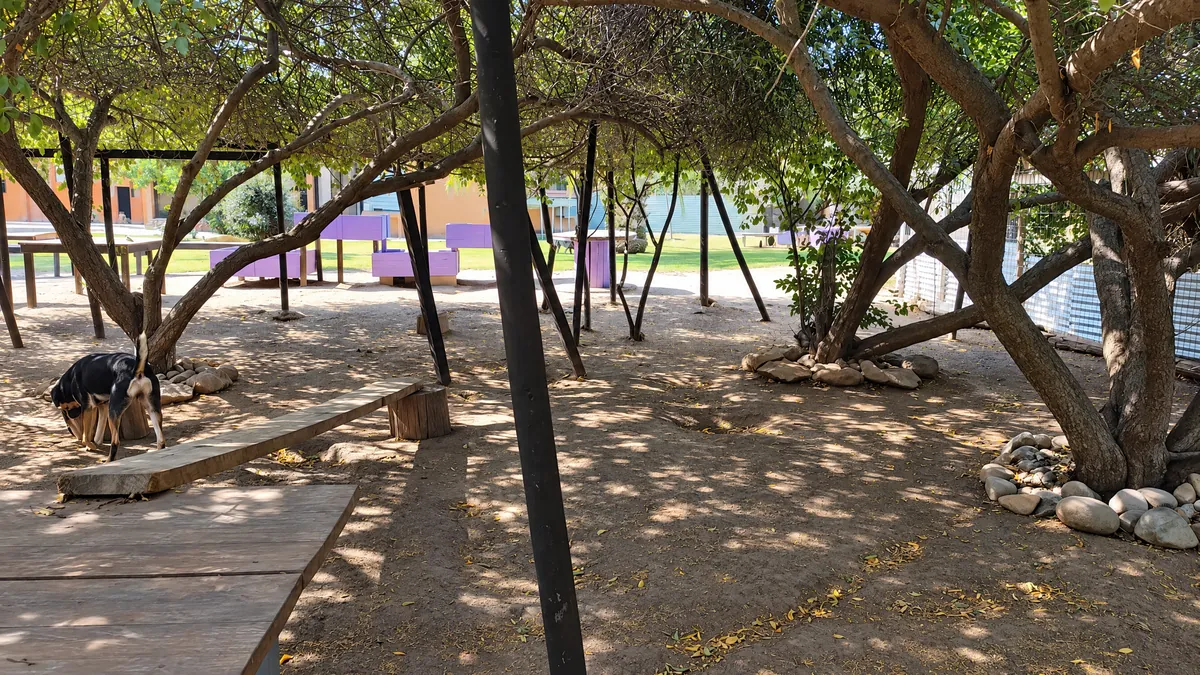
We adapt every stay to each dog's age, temperament and energy level. Calmer dogs can rest in the shade without being disturbed, and we have separate spaces and home-style areas with sofas and beds. At night the dogs sleep indoors, in a gallery with beds and blankets.
There's a vet on site, the same person, Joshua or Cristina, always looks after your dog, and we send you photos and videos during the stay. Joshua is from Denver, so you can explain your dog's routine and medication in English. Boarding starts at CLP 17,000 + VAT a day and depends on your dog's needs and any medication. Before a first stay we hold a mandatory meet-and-greet, and we ask for up-to-date vaccines and spaying or neutering.
Frequently asked questions
1.At what age is a dog considered a senior?
It depends on the breed. AAHA defines it as the last 25% of a dog's estimated lifespan, and the Merck Veterinary Manual uses 7 to 8 years as a reference. Your vet can tell you what to expect for your dog's breed and health.
2.How often should a senior dog see the vet?
At least twice a year, according to the Merck Veterinary Manual, with blood and urine tests every 6 to 12 months under AAHA's guidelines. If you notice changes between visits, don't wait for the next appointment.
3.Can an older dog stay at a dog hotel?
Yes, if the place offers calm, routine and veterinary care. At The Place's we have separate spaces and home-style areas for calmer dogs, a vet on site, and the same person always looks after your dog. We talk it through at the meet-and-greet.
Sources
- AAHA (2023): Senior Care Guidelines for Dogs and Cats
- Merck Veterinary Manual — Routine Health Care of Dogs (dog owners' version)
- Merck Veterinary Manual — Behavior Problems in Dogs (dog owners' version)
- Merck Veterinary Manual — Behavior Problems of Dogs: cognitive dysfunction syndrome (professional version)
This guide is for information only and doesn't replace a consultation with a veterinarian.